The Himalaya and Mount Everest: Legends of the Sky
Talking about the highest point on Earth, Mount Everest certainly steals the limelight. It’s the world’s highest mountain, a dream for mountaineers and a whizz to appreciate. But Everest isn’t alone Earth hosts multiple breathtaking summits. Let’s explore the tallest mountains in the world, the largest peaks in the world, and how they liken from the Himalaya and Mount Everest to the highest Atlas Mountain in Africa.
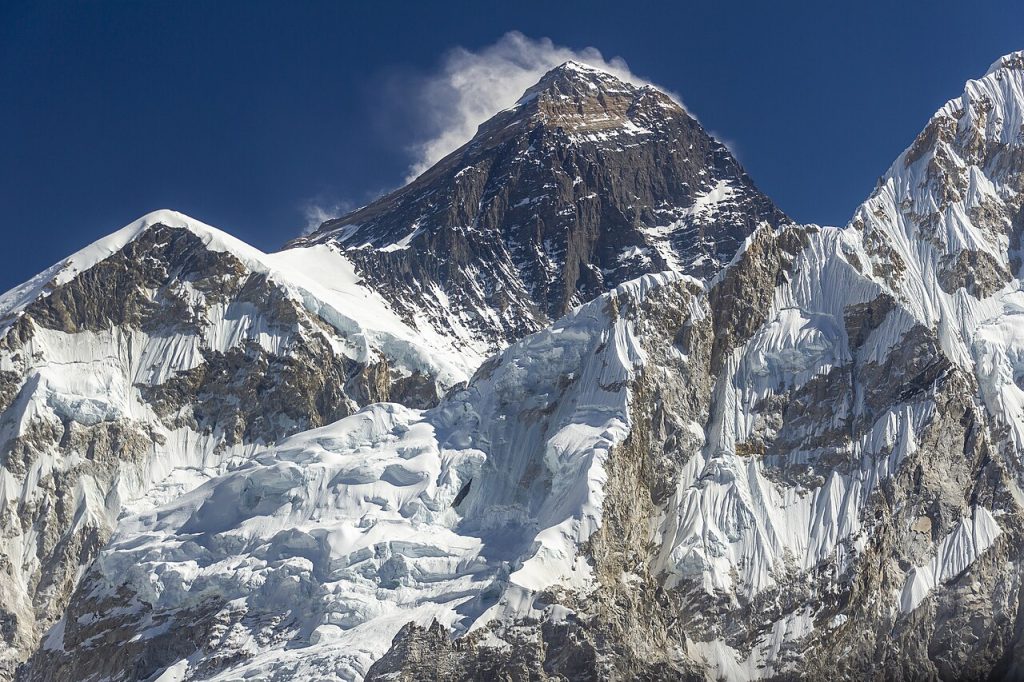
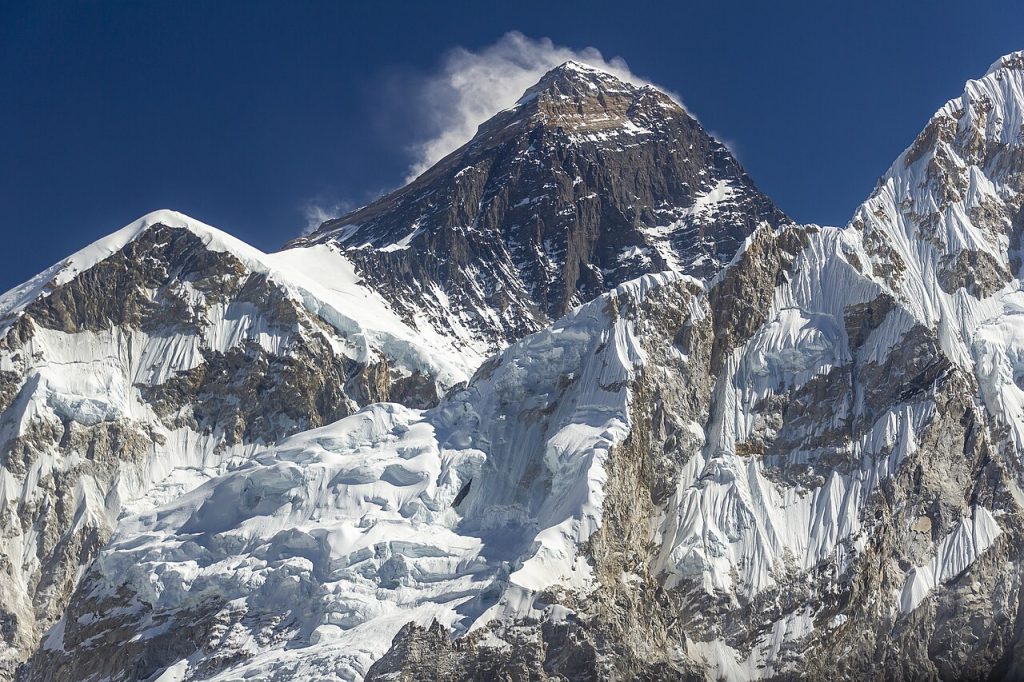
The Himalaya and Mount Everest together creates Earth’s most iconic mountain series. Everest, standing at 8,848.87 meters, is the tallest mountain on Earth and the highest peak in the world. This range holds numerous of the highest mountain peaks in the world, attracting voyagers worldwide.
Without the doubt, Everest is the highest mountain on Earth the ultimate highest point above sea level. Among the tallest peak in the world, it’s the utmost known and admired.
I. The Colossus of the Continent
To understand the Himalaya is to understand a planet in constant, violent motion. Unlike the aging, rounded peaks of the Appalachians or the Urals, the Himalaya is a “young” mountain range—restless, jagged, and still growing. Approximately 50 million years ago, the Indian tectonic plate began a slow-motion collision with the Eurasian plate. This wasn’t a simple meeting; it was a subduction and folding of the Earth’s crust so massive that it pushed the seafloor of the ancient Tethys Ocean into the stratosphere.
This explains why, at 8,848.86 meters (29,031.7 feet), the summit of Mount Everest is composed of marine limestone. When a climber stands on the peak, they are standing on what was once a prehistoric seabed. This geological irony—that the highest point on Earth was once its lowest—is the first of many legends written into the stone itself.
II. Chomolungma: The Goddess Mother
While the West knows the peak as “Everest” (named after Sir George Everest, a British Surveyor General who, ironically, never actually saw the mountain), the local names carry far more weight. In Tibet, it is Chomolungma (“Goddess Mother of the World”); in Nepal, it is Sagarmatha (“Goddess of the Sky”).
For the Sherpa people, the Himalaya is not a gymnasium for record-breaking; it is a sacred cathedral. They believe the mountains are inhabited by deities. Mount Everest is specifically the home of Miyolangsangma, the Tibetan Goddess of Inexhaustible Giving. Before any expedition sets foot on the ice, a Puja ceremony is held. Monks and climbers pray together, burning juniper incense and asking for safe passage. To the Sherpa, a “successful” climb is not about conquering a peak, but being granted permission by the goddess to visit the heavens and return alive.
III. The Architecture of the Ascent
Climbing Everest is less about “hiking” and more about managing a slow biological decline. The mountain is divided into distinct zones, each with its own legendary dangers:
The Khumbu Icefall: A “river” of ice that moves up to a meter a day. It is a labyrinth of shifting seracs (ice towers) and bottomless crevasses. It is often considered the most dangerous stage of the South Col route.
The Western Cwm: Known as the “Valley of Silence,” this glacial basin can become a solar oven, where temperatures swing from freezing to sweltering as the sun reflects off the surrounding walls of Nuptse and Lhotse.
The Death Zone: Above 8,000 meters, the atmospheric pressure is so low that there is only about one-third of the oxygen available at sea level. Here, the body cannot digest food, sleep is impossible, and the brain begins to swell (HACE) or the lungs fill with fluid (HAPE).
IV. The Ghosts of the Sky
The “Legends” of the sky are often the people who never came down. The history of Everest is a graveyard of ambition and heroism. Perhaps the most enduring mystery is that of George Mallory and Andrew Irvine, who vanished into the mist in 1924. Mallory, when asked why he wanted to climb it, famously replied, “Because it is there.” Whether they reached the summit 29 years before Hillary and Norgay remains one of history’s greatest debates.
Then there is the “Third Man” phenomenon. Dozens of elite climbers, pushed to the brink of exhaustion and hypoxia, have reported the distinct feeling of a presence walking beside them—sometimes even offering encouragement or sharing food that doesn’t exist. Whether this is a neurological glitch or a spiritual guardian, it has become part of the mountain’s ethereal folklore.
V. The Modern Paradox: Tragedy and Trash
In the 21st century, the legend has hit a crossroads. What was once the ultimate test of human endurance is now a commercial enterprise. The “traffic jams” in the Death Zone—lines of hundreds of climbers waiting to summit—have led to tragic, avoidable deaths.
Furthermore, the mountain faces an environmental crisis. Decades of “expedition debris”—oxygen bottles, torn tents, and human waste—have earned Everest the nickname “the world’s highest junkyard.” However, the legend is fighting back. Recent initiatives by the Nepali government and local Sherpa groups have seen tons of waste removed, and new regulations require climbers to bring back their own waste. The mountain is a mirror: it reflects the best of human curiosity and the worst of our consumption.
VI. Why the Legend Endures
Why do we still look to the Himalaya? In an age where every corner of the Earth is mapped by satellites and reachable by Google Earth, the Himalaya remains one of the few places where humans are reminded of their insignificance.
Standing at the base of the Great Himalayan Range, one feels the “sublime”—that specific mix of overwhelming beauty and paralyzing terror. The peaks are a bridge between the terrestrial and the celestial. They are the “Legends of the Sky” because they represent the limit of where life can exist.
Key Takeaways for your Project
Contrast is King: Always balance the cold, hard science (tectonics) with the warm, human element (Sherpa culture).
The “Sea to Sky” Hook: Use the marine fossils as a central metaphor for the mountain’s journey.
Respect the Scale: Use terms like “The Death Zone” to maintain the stakes of the narrative.
1. More Than Just Everest: Other Massive Mountains
Beyond Everest are hulks like K2 and Kangchenjunga significant among the tallest mountains in the world and also some of the largest peaks in the world. These summits dominate not just by altitude but by occurrence.
In Africa, the highest Atlas Mountain in Morocco stands pleased at 4,167 meters. Yet not the tallest mountain on Earth, it’s culturally and geographically substantial, making the list of significant highest points worldwide.
2. Highest vs. Tallest vs. Largest. What’s the Difference?
Terms like highest mountain peak in the world, tallest mountain peak in the world, and largest mountain in the world are frequently used relatively but they differ.
- Highest point = Altitude above sea level (e.g., Everest).
- Tallest peak in the world = Total vertical rise from base (e.g., Mauna Kea).
- Largest mountain in the world = Overall bulk and volume (e.g., Denali).
Even the highest peak on Earth can be redefined reliant on measurement criteria. Still, Everest and the Himalaya and Mount Everest range are the ruling champions.
From the highest Atlas Mountain to the largest peaks in the world, these geological marvels stun all who get a chance to witness or explore them.
3. Everest Region Trek: A Journey to the Highest Point on Earth
Trekking around the highest mountain on Earth is more than a physical encounter it’s a mystical and cultural experience as well. The Everest Base Camp Trek takes adventurers over Sherpa villages, sacred monasteries, and jaw-dropping panoramas.
Here, you walk in the shades of the tallest mountain on Earth, looking up at the highest peak in the world. You’ll witness actual the majesty of the tallest mountains in the world and position at the base of the highest mountain peak in the world.
This trek bids connection to nature, to persons, and to the depth of the Himalaya and Mount Everest. It’s not just about reaching the highest point; it’s about learning the stories, encounters, and conquests written into every path.
Ready for the Journey of a Lifetime?
Imagine standing face-to-face with the tallest mountain on Earth, breathing in brittle Himalayan air, and viewing prayer flags hop in the wind above primeval monasteries. This isn’t just a hike, it’s a soul-stirring quest into the core of the Himalayas, where every footstep connects a story and each peak clutches a promise.
With Shangrila Voyages, your dream of discovering the tallest mountain on Earth becomes a stunningly guided reality. Whether you’re chasing the delight of reaching Everest Base Camp or soaked in the spiritual calm of mountain communities, our expert local team safeguards a memorable voyage safe, immersive, and deeply meaningful.
Explore Everest with Shangrila Voyages
Let us take you nearer to the highest point on Earth, through wisely curated itineraries, authentic cultural experiences, and breathtaking views. The Himalaya and Mount Everest awaits and Shangrila Voyages is here to take you there.
Book your journey today and determine why the highest peak in the world remains to arrest the hearts of pioneers from every angle of the globe.
The “Eight-Thou sander” Club
While Everest is the most famous, it is part of an elite group of 14 peaks that exceed 8,000 meters. These are the only places on Earth where “Death Zone” conditions exist.
K2: The Savage Mountain
Often considered a more prestigious climb than Everest among elite mountaineers, K2 (8,611m) is located in the Karakoram range. It is statistically much more dangerous than Everest, with a fatality rate of approximately 25% for those who reach the summit.
The Role of the Sherpas
No discussion of Earth’s highest points is complete without the Sherpa people. Living at high altitudes for generations has led to a biological adaptation: their bodies are more efficient at using oxygen to produce energy, even when oxygen levels are low. They aren’t just guides; they are the physiological masters of the high-altitude world.
Understanding these peaks requires us to change our perspective on how we measure our world. Whether it’s the tectonic power of Everest, the planetary physics of Chimborazo, or the oceanic depth of Mauna Kea, these “highest points” represent the absolute limits of our planet’s geography.
Some of the Journeys around EVEREST Regions are: