When you think of Everest, what comes to mind? The towering, snow-capped peak that looms as the highest point on Earth? The daring mountaineers who attempt to reach its summit? Or perhaps the breathtaking trek that weaves through Sherpa villages, icy rivers, and towering peaks—the Everest Base Camp Trek?
With Shangrila Voyages, this trek becomes not just an adventure but a deeply transformative experience. Over the course of a few weeks, you’ll leave behind the familiar comforts of home and immerse yourself in the raw beauty of Nepal’s Khumbu region, all while being guided by a team that cares deeply about both your safety and the culture of the region. This blog is my diary of the journey I experienced with Shangrila Voyages on the Everest Base Camp Trek.
The Start of Something Special: Kathmandu
The first chapter of this adventure begins in Kathmandu. After the long flight, I arrive in this vibrant city, where the streets are alive with the sound of honking cars, the smell of spices wafting through the air, and the distant chime of temple bells. But despite the chaos, Kathmandu has a certain serenity, especially when you take the time to step into one of the many ancient temples that dot the city.
On the evening before the trek begins, I meet my fellow trekkers and the Shangrila Voyages team. Our guide, a friendly Sherpa named Tenzing, welcomes us with a warm smile, making sure to put everyone at ease. We gather for a pre-trek briefing, excited and nervous, all knowing that tomorrow marks the start of a journey we’ve dreamed of for years.
Into the Mountains: Lukla and Beyond
The next morning, we take a thrilling flight to Lukla, often described as one of the world’s most dangerous airports due to its short, steep runway. As we take off from Kathmandu and fly toward the mountains, the views are simply mesmerizing. Towering peaks start to emerge in the distance, and I can already feel the excitement building inside me.
In Lukla, the landscape changes dramatically. The bustling town serves as a gateway to the Himalayas, and here, we begin our trek. The path leads us through small villages and lush forests, the air growing crisper with every step. The contrast between the chaotic city of Kathmandu and the peaceful, rugged terrain of the mountains is striking. As we stop in Phakding for the night, I realize that this trek is not just about the final destination—it’s about the journey itself. The fresh mountain air, the sound of the Dudh Koshi river rushing by, and the serenity of the surroundings are already leaving an impression on me.
The Warmth of the Sherpas: Namche Bazaar
The following days unfold in a whirlwind of discovery. We make our way to Namche Bazaar, the bustling heart of the Khumbu region. It’s a small town, but it’s a hub of activity, with trekkers, climbers, and locals going about their daily routines. Here, we take a well-deserved rest day to acclimatize. The altitude is starting to affect me, but Tenzing reassures me that this is part of the process.
Namche is a place where the Sherpa culture is alive and thriving. The people here are incredibly warm, welcoming trekkers from all over the world with smiles and cups of hot tea. I take the time to explore the local markets, where you can find everything from yak wool scarves to brightly colored prayer flags. The real magic, however, comes from the towering views of the surrounding peaks, including the iconic Ama Dablam, which looks like something straight out of a postcard.
Climbing Higher: Tengboche and Dingboche
As we continue our trek, the air grows thinner, and the landscape more dramatic. We pass through the small village of Tengboche, where we visit the famous Tengboche Monastery. The monks’ chants and the sacred aura of the monastery provide a sense of peace and calm that contrasts beautifully with the harshness of the mountains.
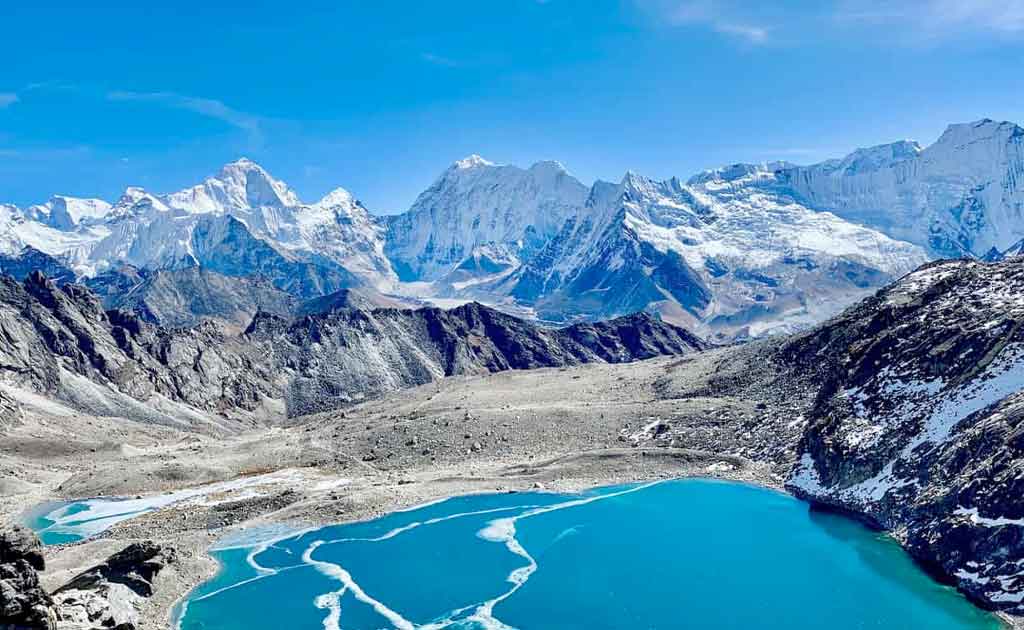
In the days that follow, we ascend to Dingboche, a tiny settlement that feels like a world away from everything. The higher we climb, the more challenging it becomes, but the reward is immense. Every turn reveals a new, jaw-dropping view of snow-capped peaks, ice fields, and valleys that seem to stretch forever. At night, the stars shine brighter than I ever imagined, and the chill in the air reminds me that I’m in one of the most remote places on Earth.
The Final Push: Lobuche and Gorak Shep
As we make our way to Lobuche and then to Gorak Shep, the journey becomes a test of mental and physical endurance. The air is thin, the ground rocky, and the landscape barren. But there’s something indescribable about this place—the mountains feel alive, as if they’re watching over you, guiding you.
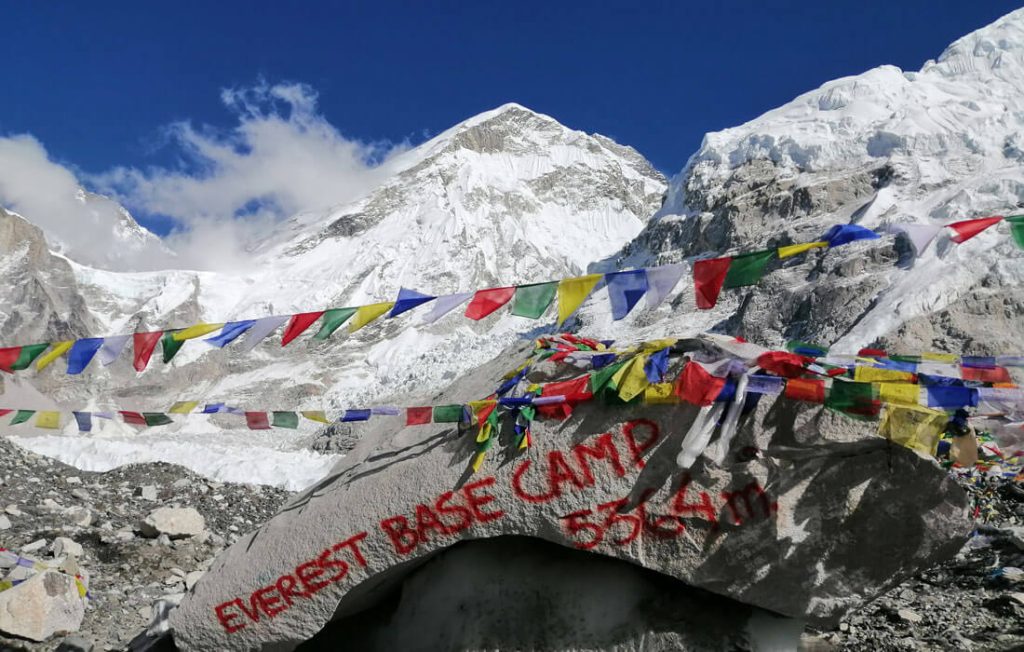
At Gorak Shep, I feel the weight of the journey settle in. This is it—the final push to Everest Base Camp. I’m both excited and anxious, knowing that the hardest part is yet to come. The trail is steep, and the thin air makes every step feel heavier. But as we finally reach Everest Base Camp, all the fatigue, the doubts, and the struggles fade away. I stand at the foot of the world’s highest peak, gazing up at Everest, the immense Khumbu Icefall, and the surrounding glaciers. There’s a sense of awe and reverence that takes over, a reminder that sometimes, the most incredible moments in life are the ones you have to work the hardest for.
The Descent: Reflecting on the Journey
The trek back to Lukla is bittersweet. There’s a sense of accomplishment as we descend, but also a feeling of nostalgia for the mountains that have become a part of me. The beauty of the region, the warmth of the Sherpa people, and the sense of camaraderie with my fellow trekkers are things I will carry with me forever.
The Shangrila Voyages Difference
What made this experience even more special was the team at Shangrila Voyages. From the moment I arrived in Kathmandu, I felt supported every step of the way. Tenzing, our guide, was not just an expert in the mountains but also a storyteller who shared the rich cultural history of the region. The porters, always smiling and willing to help, became more like family than staff. With Shangrila Voyages, it wasn’t just about reaching Everest Base Camp Trek—it was about doing so with respect for the environment, the culture, and the people.
The Emotional Core: Why We Trek
The Everest Base Camp Trek isn’t just a physical challenge; it’s a mental and emotional metamorphosis. The days are long, and the air at 5,364 meters is thin enough to make every breath a conscious effort. You will feel the weight of the altitude, the chill of the Khumbu wind, and the strain on your muscles. Yet, the rewards are beyond words.
Standing at the base of Everest, you aren’t just looking at a mountain; you are looking at the culmination of human ambition and the raw, untamed power of nature. Surrounded by the towering peaks of Lhotse, Nuptse, and Pumori, you feel both infinitesimal and infinitely alive. It is a humbling and life-changing experience that redefines your perspective on what is “impossible.”
The Shangrila Voyages Difference: Culture Over Commotion
If you’re dreaming of making this trek, Shangrila Voyages offers more than just a path to Everest—it offers a true Himalayan experience. Every step is a celebration of nature, culture, and adventure.
One of the most profound aspects of traveling with Shangrila Voyages is the deep dive into Sherpa heritage. Our guides, like Tenzing, don’t just lead the way; they open doors to monasteries like Tengboche, explain the significance of the Mani stones we walk past (always on the right!), and share stories of the “Mother Goddess of the World”—Chomolungma.
Deep-Dive: Navigating the Everest Base Camp Trek
The Flora and Fauna of Sagarmatha National Park
As you ascend the Everest Base Camp Trek, you move through five distinct ecological zones.
The Lower Reach (Phakding to Namche): You’ll walk through lush forests of blue pine, fir, and juniper. If you trek in the spring, the Rhododendrons (Nepal’s national flower) paint the hillsides in vivid shades of crimson and pink.
The High Alpine (Dingboche to Gorak Shep): Trees vanish, replaced by hardy shrubs and mosses. Keep your eyes peeled for the Himalayan Tahr (a mountain goat with a thick mane) or the Danphe (Himalayan Monal), a bird with rainbow-colored feathers.
Surviving the Altitude: 3 Rules of the Trail
Hydration is Non-Negotiable: Aim for 4 liters of water daily. Dehydration is a primary trigger for Acute Mountain Sickness (AMS).
The “Climb High, Sleep Low” Strategy: On acclimatization days in Namche and Dingboche, Shangrila Voyages leads optional afternoon hikes to higher elevations before returning to a lower altitude to sleep. This triggers your body to produce more red blood cells.
Fueling the Engine: Your appetite may drop as you go higher, but you must eat. The local staple, Dal Bhat (lentil soup and rice), is the ultimate trekking fuel. As the locals say: “Dal Bhat Power, 24 Hour!”
Logistics & Permits for 2026
To legally embark on the Everest Base Camp Trek, you need two specific permits:
Sagarmatha National Park Entry Permit: Approx. $30 USD (NPR 3,000).
Khumbu Pasang Lhamu Rural Municipality Permit: Approx. $20 USD (NPR 2,000).
Note: As of 2026, the TIMS card is no longer required for this specific region, having been replaced by the local municipality permit.
A Legacy Etched in the Heart
As I look back on my journey, I know that it wasn’t just the destination that made it unforgettable. It was the sound of yak bells echoing in the mist, the taste of warm butter tea after a long climb, and the sense of camaraderie with my fellow trekkers. With Shangrila Voyages, I didn’t just visit the Himalayas; I became a small part of their story.
Ready to embark on your own transformative Everest Base Camp Trek? Shangrila Voyages is here to guide you every step of the way. Let us help make your dream a reality.